All-inclusive Kilimanjaro packages for 2026-2027 typically range from $2,200 to $4,500+ per person, depending on the route, duration, operator, and level of service. These packages generally cover essential climbing costs such as park entrance fees, rescue fees, camping permits, experienced guides and porters, all meals during the trek, boiled water, basic camping equipment (tents, sleeping mats), and transportation to and from the mountain. Luxury packages or those with private climbs may cost more, while budget options might have fewer inclusions or use more basic gear. Understanding these inclusions is vital for accurate budgeting and a successful climb.
Defining All-Inclusive Kilimanjaro Packages for Your 2026-2027 Climb
When you’re setting your sights on the roof of Africa, the concept of an “all-inclusive” Kilimanjaro package can be a beacon of clarity amidst the planning complexities. For aspiring trekkers aiming for a 2026 or 2027 expedition, understanding precisely what this term entails is crucial for managing expectations and budgeting effectively. An all-inclusive Kilimanjaro package, in its most comprehensive sense, aims to bundle the majority of the costs and logistical elements required for your ascent into a single upfront price. This approach simplifies planning by minimizing the number of separate payments and arrangements you need to make, allowing you to focus more on training and preparation.
At Climb 4 Africa, we define our all-inclusive Kilimanjaro packages as providing a complete solution from the moment you arrive in Tanzania until you depart, or at least covering all the core components of the climb itself. This means that beyond just the trek, we aim to integrate services that make the journey smoother and more comfortable. However, it’s important to note that the exact definition can vary slightly between operators. Therefore, a deep look at the specifics of what is and isn’t included in any given package is paramount for any climber planning their 2026-2027 adventure.
This guide will meticulously dissect the typical components of an all-inclusive Kilimanjaro package, shedding light on the total cost implications and providing a clear picture of what you can expect for your investment. We’ll explore the different price points, the factors influencing them, and the critical elements that form the backbone of a successful and memorable climb up Mount Kilimanjaro.
The Total Cost of All-Inclusive Kilimanjaro Packages: What to Expect in 2026-2027
The financial commitment for an all-inclusive Kilimanjaro package is often the primary consideration for trekkers. For the 2026-2027 climbing seasons, you can generally expect prices to fall within a broad spectrum, influenced by several key factors. The most significant determinants of cost are the chosen route, the duration of the climb, the reputation and operational standards of the tour operator, and the desired level of comfort and support.
As a general guideline, most reputable operators offering comprehensive all-inclusive Kilimanjaro packages will price their treks between $2,200 and $4,500 per person for standard group climbs. Private climbs or those opting for higher-end services, such as luxury camping or specialized guides, can push the cost upwards, potentially exceeding $5,000 or even $6,000 per person.
It’s vital to distinguish between budget operators and those who prioritize safety, quality, and porter welfare. While lower prices might seem attractive, they can sometimes indicate compromises in essential areas like guide experience, equipment quality, food provisions, or fair wages for the mountain crew. For a climb as demanding as Kilimanjaro, investing in a package that ensures safety and a positive experience for both climbers and crew is highly recommended.
Factors that will influence the total cost of your all-inclusive Kilimanjaro package include:
- Route Choice: Longer routes like the Lemosho or Northern Circuit generally cost more due to the extended duration and associated logistical expenses. Shorter, more direct routes like Marangu or Machame (though still requiring 6-7 days) are typically less expensive.
- Duration: The number of days spent on the mountain directly impacts costs. Longer treks allow for better acclimatization, increasing success rates, but also incur higher fees for park entry, crew wages, and supplies. A 7-day trek will naturally cost more than a 5-day trek.
- Operator Standards: Companies with a strong safety record, ethical treatment of staff, high-quality equipment, and experienced guides often command higher prices. This is where operators like Climb 4 Africa invest to ensure a superior and responsible climbing experience.
- Group Size: While many packages are priced per person for group climbs, opting for a private climb will significantly increase the cost, as the fixed expenses are spread over fewer individuals.
- Inclusions: The more comprehensive the inclusions (e.g., including airport transfers, pre- and post-climb accommodation, extra meals in town, personal porter services), the higher the package price will be.
- Season: While not always a primary driver for all-inclusive packages, peak climbing seasons (e.g., January-March and June-October) might see slightly higher demand and, consequently, potentially firmer pricing from some operators, though most maintain consistent pricing for their packages.
When comparing prices for 2026-2027, always request a detailed breakdown of inclusions to ensure you are comparing like-for-like. A seemingly cheaper package might omit crucial elements, leading to unexpected expenses later.
Core Inclusions in All-Inclusive Kilimanjaro Packages
To provide true value and peace of mind, reputable all-inclusive Kilimanjaro packages bundle a comprehensive set of services. These core inclusions are designed to cover the essential elements of the climb, ensuring you are well-equipped, supported, and cared for from start to finish. Understanding these elements is key to appreciating the value offered by a good operator and to planning your budget accurately for 2026-2027.
Here’s a detailed look at what you can typically expect to be included in a quality all-inclusive Kilimanjaro package:
Park Fees and Permits: The Foundation of Your Climb
This is arguably the most significant fixed cost component of any Kilimanjaro trek, and it is almost universally included in all-inclusive packages. These fees are mandated by the Tanzania National Parks Authority (TANAPA) and are non-negotiable. They typically comprise:
- Kilimanjaro National Park Entrance Fee: This is a daily fee charged for every day you are within the park boundaries.
- Camping/Hut Fees: Depending on the route and campsites used, there are fees for overnight stays. Marangu Route uses huts, while all other routes utilize designated campsites.
- Rescue Fees: A mandatory fee that covers the cost of emergency rescue operations should they be required.
- Crater Fees (if applicable): Some routes, like the full crater rim ascent on Kibo, may incur additional fees.
For a standard 6-day climb, these fees can amount to several hundred dollars per person. Operators absorb this cost into the package price, providing a significant saving and simplification for the trekker.
Guides, Porters, and Support Crew: Your Mountain Team
No one climbs Kilimanjaro alone. Your all-inclusive package will include a professional and experienced team to guide you safely to the summit and back. This team is critical to your success and safety.
- Lead Guide(s): Highly trained, certified guides with extensive experience on Kilimanjaro. They are responsible for navigation, monitoring your health, and making critical decisions regarding your ascent. Typically, you’ll have at least one lead guide, and possibly an assistant guide for larger groups.
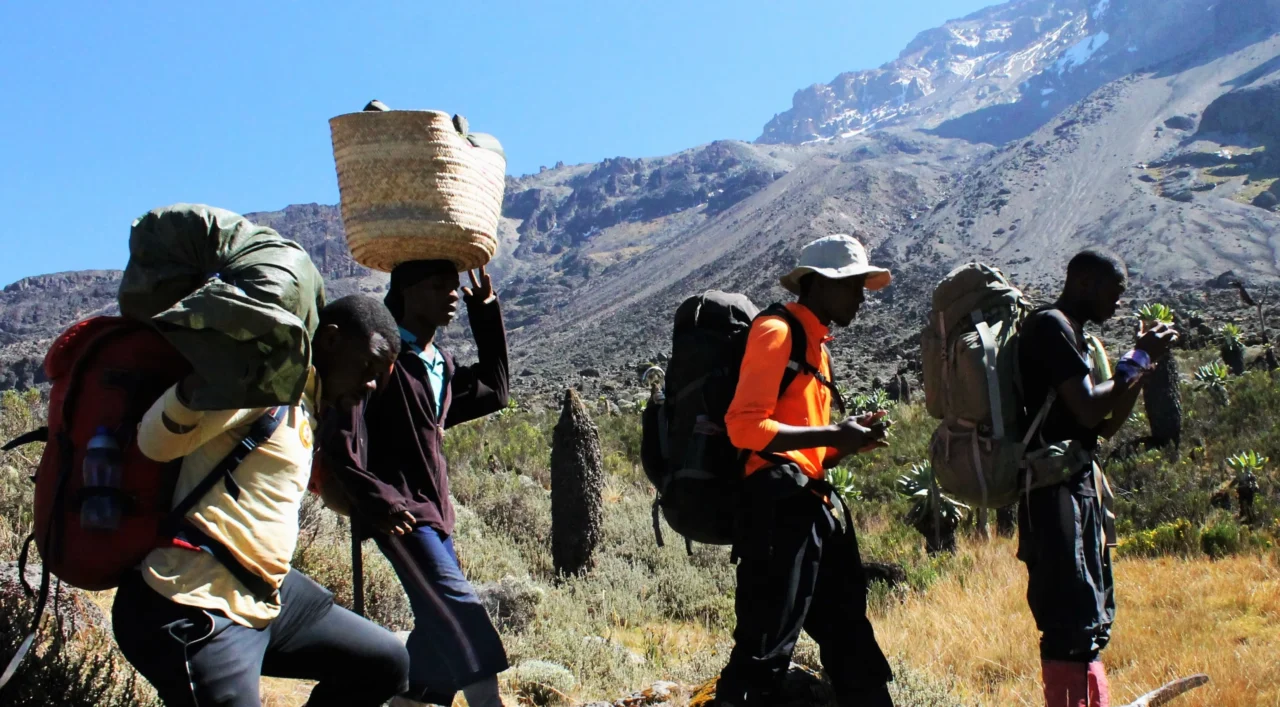
- Porters: The backbone of the expedition. Porters carry the bulk of the equipment, including tents, food, cooking gear, and your personal duffel bag (within specified weight limits). A good operator ensures fair wages, proper equipment, and adequate food for their porters. The number of porters is usually dictated by the group size and the amount of gear.
- Cook: A dedicated cook who prepares all your meals on the mountain, ensuring you have nutritious and energizing food throughout the trek.
Reputable operators also emphasize ethical treatment of their mountain crew, including fair wages, adequate food, appropriate gear, and responsible load limits. This is a significant aspect of what distinguishes a quality all-inclusive package. Climb 4 Africa is committed to these ethical standards, ensuring our crew is well-cared for.
Accommodation: On the Mountain and Before/After
This inclusion can vary, but generally covers:
- Mountain Accommodation: For routes other than Marangu, this means high-quality, spacious tents suitable for mountain conditions. For the Marangu route, it refers to the basic but functional mountain huts. All-inclusive packages provide these tents and often include sleeping mats.
- Pre- and Post-Climb Accommodation: Many comprehensive packages include one or two nights of accommodation in a hotel or lodge in Moshi or Arusha before and after your climb. This provides a comfortable place to rest, prepare, and celebrate your achievement.
Ensure you clarify whether this is included and if it’s based on shared or single occupancy, as this can affect the final price or require a single supplement.
Meals and Hydration: Fueling Your Expedition
Proper nutrition and hydration are vital for acclimatization and energy levels. All-inclusive packages cover all meals prepared by your dedicated cook on the mountain.
- All Meals on the Mountain: This includes breakfast, lunch, and dinner, prepared fresh daily. Expect a variety of hot, nutritious meals designed to provide sustained energy. Examples include porridge, eggs, pancakes for breakfast; rice, pasta, chicken, vegetables, soups for lunch and dinner; and snacks like biscuits and fruit.
- Boiled Drinking Water: Access to safe, boiled drinking water is provided daily. Operators will supply purified or boiled water free of charge throughout the trek.
- Tea, Coffee, and Hot Chocolate: Usually provided during meal times on the mountain.
Meals in town before and after the climb might also be included, particularly breakfast at your hotel. Clarify if lunches and dinners in town are part of the package or an additional expense.
Equipment: Essential Gear Provided
While you’ll need to bring your personal clothing and gear, all-inclusive packages typically supply the essential communal and camping equipment:
- Tents: High-quality, waterproof, and spacious tents for sleeping and dining (mess tent).
- Sleeping Mats: Basic foam sleeping mats are usually provided.
- Cooking Equipment: All necessary stoves, fuel, pots, pans, and utensils for the cook.
Some operators may also offer optional gear rental, such as sleeping bags or trekking poles, which might be included in higher-tier packages or available for an additional fee.
Transportation: Getting to and From the Mountain
Logistical transport is a key component that all-inclusive packages handle:
- Airport Transfers: Often included, picking you up from Kilimanjaro International Airport (JRO) and transferring you to your hotel in Moshi or Arusha.
- Transfers to/from the Mountain: Round-trip transportation from your hotel to the Kilimanjaro National Park gates (e.g., Marangu Gate, Machame Gate) and back.
Safety and Communication: Ensuring Your Well-being
While not always explicitly itemized, safety measures are a critical part of a reputable operator’s offering:
- Emergency Oxygen: Most reputable operators carry supplementary oxygen for emergency use.
- First Aid Kit: Comprehensive first-aid kits are carried by guides.
- Communication Devices: Guides may carry satellite phones or radios for emergency communication, though this isn’t always guaranteed for all operators.
What’s Typically NOT Included in All-Inclusive Kilimanjaro Packages
Even with the most comprehensive all-inclusive Kilimanjaro packages, there are always items and services that fall outside the standard price. Being aware of these exclusions is just as important as knowing the inclusions to avoid unexpected expenses and ensure you’re fully prepared for your 2026-2027 trek.
Here are the common exclusions you should anticipate:
International Flights
This is the most significant exclusion. All-inclusive packages focus on the land-based costs of your Kilimanjaro expedition. You will need to arrange and pay for your flights to and from Kilimanjaro International Airport (JRO) separately.
Visas and Passports
Ensure your passport is valid for at least six months beyond your intended stay and has sufficient blank pages. You will need to secure your Tanzanian visa (if required based on your nationality) and pay any associated fees. This is typically done online or upon arrival.
Travel Insurance
Comprehensive travel insurance is **mandatory** for all Kilimanjaro climbers. This insurance must cover high-altitude trekking, emergency medical evacuation, and repatriation. Operators will require proof of this insurance. It is a crucial safety net that you must arrange yourself.
Personal Climbing Gear
While communal gear like tents and sleeping mats are provided, you are responsible for your personal clothing and equipment. This includes:
- Clothing: Layers for varying temperatures, waterproof outer shell, warm down jacket, thermal base layers, hiking socks, gloves, hats.
- Footwear: Broken-in hiking boots, camp shoes.
- Sleeping Bag: A 4-season sleeping bag rated for sub-zero temperatures.
- Trekking Poles: Highly recommended for stability and reducing joint strain.
- Headlamp: Essential for navigating in the dark, especially on summit night.
- Water Bottles/Hydration Reservoir: At least 3 liters capacity.
- Backpack/Duffel Bag: A daypack for essentials and a larger duffel bag for porters to carry.
While some operators offer gear rental (e.g., sleeping bags, poles), these are usually an additional cost unless specified as included in a premium package.
Tips for the Mountain Crew
Tipping is a customary and highly appreciated way to show gratitude to your guides, porters, and cook for their hard work and dedication. While not technically part of the package cost, it’s an essential budget item for any Kilimanjaro trek. Operators usually provide recommended tipping guidelines, often ranging from $200 to $350 per climber for a standard 7-day trek, distributed among the crew. This is a significant expense to budget for separately.
Lunches, Dinners, and Drinks in Town
While pre- and post-climb accommodation is often included, meals and drinks outside of those provided at your hotel or on the mountain are typically not covered. Budget for your own meals and beverages during your time in Moshi or Arusha.
Personal Expenses
This includes items like souvenirs, laundry services, extra snacks, alcoholic beverages, and any personal items you might purchase.
Vaccinations and Medications
Consult your doctor or a travel clinic well in advance of your 2026-2027 trip regarding recommended vaccinations and any personal medications you may need. These costs are your responsibility.
Optional Activities
Any excursions or activities you choose to do before or after your climb, such as visiting local markets, cultural tours, or hot springs, will incur additional costs.
Kilimanjaro Routes and Their Impact on All-Inclusive Package Costs
The choice of route significantly influences the duration, difficulty, and ultimately, the cost of your all-inclusive Kilimanjaro package. Longer routes offer better acclimatization profiles, increasing success rates, but naturally come with higher fees and logistical demands. Understanding these differences is key to selecting the right package for your 2026-2027 climb.
Here’s a breakdown of popular routes and how they typically affect package pricing:
Marangu Route (Coca-Cola Route)
- Duration: 5-6 days
- Cost Impact: Generally the most budget-friendly option due to its shorter duration and the use of huts instead of tents.
- Pros: Unique hut accommodation, one of the shortest routes.
- Cons: Lower acclimatization profile, lower success rates, can be crowded, less scenic than other routes.
Machame Route (Whiskey Route)
- Duration: 6-7 days
- Cost Impact: Mid-range pricing. A 7-day Machame trek is highly recommended for better acclimatization and success rates, making it slightly more expensive than a 5-day Marangu but offering a far superior experience.
- Pros: Excellent acclimatization profile, high success rates (especially on 7-day), very scenic, diverse landscapes.
- Cons: Can be steep in places, requires camping.
Lemosho Route
- Duration: 7-8 days
- Cost Impact: Upper mid-range to higher pricing. Its longer duration and the fact that it starts in a more remote western region increase logistical costs.
- Pros: Considered one of the most beautiful routes, excellent acclimatization, high success rates, less crowded initially.
- Cons: More expensive, requires camping.
Shira Route
- Duration: 7-8 days
- Cost Impact: Similar to Lemosho, upper mid-range to higher pricing due to duration and logistics.
- Pros: Starts at a high altitude, allowing for quicker acclimatization in the initial days, very scenic.
- Cons: High starting altitude can be challenging for some, requires camping.
Northern Circuit
- Duration: 9-10 days
- Cost Impact: Typically the most expensive due to the longest duration, offering the best acclimatization and highest success rates.
- Pros: Highest success rate, best acclimatization, circumnavigates the mountain offering varied views, less crowded.
- Cons: Longest and most expensive, requires camping.
Rongai Route
- Duration: 6-7 days
- Cost Impact: Mid-range pricing. It approaches from the north, offering a different perspective and often good acclimatization.
- Pros: Drier side of the mountain (good for rainy seasons), good acclimatization, less crowded than Marangu/Machame.
- Cons: Less scenic initially compared to western routes, requires camping.
Umbwe Route
- Duration: 5-6 days
- Cost Impact: Can be similar to shorter routes like Marangu or Machame (6-day), but often priced higher by operators who focus on safety and proper acclimatization, recommending longer durations (7+ days) which increases cost.
- Pros: Most direct and challenging route, steep and demanding.
- Cons: Very steep, poor acclimatization profile if done in 5-6 days, low success rates, not recommended for first-time high-altitude trekkers.
When budgeting for your 2026-2027 climb, consider that longer routes like the Northern Circuit or 8-day Lemosho will offer the best chance of reaching the summit comfortably and safely, and their all-inclusive package prices will reflect this investment in time and resources.
Comparing Operator Standards: Why Price Varies Significantly
The wide range in pricing for all-inclusive Kilimanjaro packages (from $2,200 to $4,500+) isn’t just about profit margins; it reflects fundamental differences in operational standards, safety protocols, and ethical practices. Choosing an operator based solely on the lowest price can be a risky decision for a Kilimanjaro expedition.
Here’s what differentiates operators and influences their pricing for 2026-2027:
Safety and Emergency Preparedness
Top-tier operators invest heavily in safety. This includes:
- Experienced Guides: Hiring and retaining highly qualified guides with advanced first-aid and high-altitude training.
- Equipment: Carrying multiple supplementary oxygen cylinders, pulse oximeters for monitoring, and comprehensive medical kits.
- Communication: Using satellite phones or robust radio systems for reliable communication.
- Rescue Protocols: Having well-defined emergency procedures and potentially partnerships with local rescue services.
Budget operators may cut corners here, carrying less safety equipment or relying on less experienced guides, which can be dangerous.
Crew Welfare and Fair Wages
Ethical operators prioritize the well-being of their mountain crew. This means:
- Fair Wages: Paying porters and guides significantly above the minimum required by law, ensuring they can support their families.
- Proper Gear: Providing waterproof clothing, sturdy boots, and warm sleeping bags for all crew members.
- Adequate Food: Ensuring the crew receives nutritious meals comparable to what clients eat.
- Reasonable Loads: Adhering to ethical load limits for porters, typically around 15-20kg per porter.
Companies that offer suspiciously low prices often do so by underpaying their crew, providing them with inadequate gear, or overloading them, which can lead to health issues and decreased morale. Climb 4 Africa is a proud partner of the Kilimanjaro Porters Assistance Project (KPAP), ensuring ethical treatment and fair practices.
Quality of Equipment and Food
Comfort and reliability on the mountain depend on the quality of gear and food:
- Tents: High-quality, waterproof, and sturdy tents that can withstand mountain weather.
- Sleeping Mats: Comfortable and insulating mats.
- Food: Fresh, varied, and nutritious meals prepared by skilled cooks, using good quality ingredients.
Budget operators might use older, less reliable tents or provide simpler, less appealing meals.
Group Size and Support Ratios
While all-inclusive packages are priced per person, the underlying operational costs can be affected by group size and the number of support staff per climber. Operators committed to safety and service will maintain appropriate ratios of guides and porters to climbers, even if it means slightly higher costs.
Company Reputation and Experience
Established operators with a long track record of successful and safe climbs often have higher overheads but also provide greater assurance. Their experience translates into better planning, problem-solving on the mountain, and a more polished client experience.
When comparing all-inclusive Kilimanjaro packages for 2026-2027, look beyond the headline price. Research the operator’s safety record, their policies on crew welfare, and read independent reviews. A slightly higher price for a reputable operator often translates into a safer, more enjoyable, and more ethical climb.
Planning Your 2026-2027 Kilimanjaro Expedition: Key Considerations
Beyond understanding the costs and inclusions of all-inclusive Kilimanjaro packages, successful planning for your 2026 or 2027 expedition involves several critical steps. These considerations will ensure you choose the right package, prepare adequately, and maximize your chances of a summit success while enjoying the journey.
Choosing the Right Route for You
As detailed earlier, route selection is paramount. Consider:
- Duration: Longer routes (7+ days) offer better acclimatization and higher success rates.
- Scenery: Routes like Lemosho and Northern Circuit are renowned for their beauty.
- Difficulty: Umbwe is extremely challenging; Machame and Lemosho offer a good balance.
- Crowds: Routes like Marangu can be very busy; Northern Circuit is less crowded.
For most trekkers aiming for success and a good experience in 2026-2027, the 7-day Machame or 8-day Lemosho routes are excellent choices.
Best Time to Climb Kilimanjaro
While climbing is possible year-round, certain periods offer better weather conditions:
- Peak Seasons: June to October and December to March offer the clearest skies and driest conditions. These are the most popular times, and booking in advance for 2026-2027 is recommended.
- Shoulder Seasons: April and November are generally the wettest months and are best avoided unless seeking fewer crowds and potentially lower prices (though all-inclusive packages often maintain stable pricing).
Physical Training and Acclimatization
Kilimanjaro is a serious high-altitude trek, not a walk in the park. Your all-inclusive package provides the on-mountain support, but your physical preparation is up to you.
- Cardiovascular Fitness: Engage in regular aerobic exercises like hiking, running, cycling, or swimming for at least 3-6 months prior to your climb.
- Strength Training: Focus on leg and core strength.
- Hiking Practice: Undertake long hikes with a backpack, ideally on varied terrain, to simulate mountain conditions.
- Acclimatization: While the routes are designed for acclimatization, your body’s response is individual. Proper hydration and a slow ascent pace, guided by your lead guide, are critical.
Health and Medical Considerations
- Consult Your Doctor: Discuss your plans with your physician, especially if you have any pre-existing medical conditions.
- Altitude Sickness (AMS): Understand the symptoms (headache, nausea, dizziness) and the importance of acclimatization and descent if symptoms worsen. Diamox (acetazolamide) can be prescribed by your doctor to aid acclimatization, but it is not a substitute for slow ascent.
- Vaccinations: Check with your doctor or a travel clinic for recommended vaccinations for Tanzania.
Booking Your All-Inclusive Package
When you’re ready to book your 2026-2027 Kilimanjaro adventure, consider the following:
- Operator Choice: Select a reputable operator like Climb 4 Africa, prioritizing safety, crew welfare, and quality.
- Deposit and Payment: Understand the deposit requirements and final payment schedule.
- Customization: Discuss any specific needs or preferences you may have with your operator.
What to Pack
Refer to a detailed packing list provided by your operator. Key items include thermal base layers, fleece mid-layers, a waterproof and windproof outer shell, a warm down jacket, sturdy hiking boots, warm hat and gloves, sunglasses, sunscreen, and a headlamp. Packing light but smart is essential, as porters have weight limits for your duffel bag. Ensure your personal gear is of good quality and suitable for extreme cold conditions.
Maximizing Value: Getting the Most from Your All-Inclusive Kilimanjaro Package
To ensure your investment in an all-inclusive Kilimanjaro package for 2026-2027 yields the best possible experience, focus on maximizing the value offered. This involves understanding the nuances of your package, communicating effectively with your operator, and being prepared to fully engage with the journey.
Clear Communication with Your Operator
Before, during, and after your booking, maintain open lines of communication with your chosen tour operator, such as Climb 4 Africa. This includes:
- Pre-Trip Information: Request detailed pre-trip information packs, including packing lists, training advice, and itinerary specifics.
- Clarifying Inclusions/Exclusions: Double-check every detail of your package. If something is unclear, ask for clarification. For instance, confirm if airport transfers are included, if pre-climb briefings are offered, and what the exact meal arrangements are in town.
- Dietary Needs: Inform your operator well in advance of any dietary restrictions or allergies. Reputable operators can cater to vegetarian, vegan, gluten-free, and other common dietary needs, but they need adequate notice.
- Special Requests: Discuss any specific requirements, such as a desire for a private climb or specific dates.
Leveraging the Expertise of Your Guides
Your guides are not just there to lead you; they are knowledgeable resources about Kilimanjaro, its flora, fauna, geology, and local culture. Engage with them:
- Ask Questions: Inquire about the mountain, the weather, the local environment, and Tanzanian culture.
- Listen to Advice: Pay close attention to their guidance on pacing, hydration, and recognizing signs of altitude sickness. They are professionals trained to ensure your safety and success.
- Enjoy the Journey: Guides can point out interesting sights, share stories, and help create a positive and engaging atmosphere on the trek.
Understanding the Importance of Crew Welfare
Choosing an operator committed to ethical crew treatment, like Climb 4 Africa, means your money contributes positively to the local community. Appreciate the hard work of the porters and cook. Ensure you are prepared for tipping, as this is a significant part of their income and a standard practice on Kilimanjaro. Your guides will often facilitate the tipping process at the end of the trek.
Making the Most of Mountain Amenities
Even on a basic campsite, your operator provides a mess tent for meals and socializing. Use this space to connect with fellow climbers and enjoy the communal aspect of the trek. Appreciate the hot meals and the effort of the cook. Ensure you stay hydrated by drinking the provided boiled water, as this is crucial for acclimatization.
Post-Climb Debrief and Celebration
Your all-inclusive package often includes accommodation post-climb. Use this time to rest, recover, and celebrate your achievement. Many operators offer a celebratory meal or drinks. Reflect on your experience and share your stories. This is also the time when you’ll settle any outstanding balances or tips with your operator.
By actively engaging with your package’s inclusions and the expertise of your team, you can significantly enhance the value and enjoyment of your Kilimanjaro climb, making your 2026-2027 adventure truly rewarding.
Making Your Booking for 2026-2027: Next Steps
Planning your dream climb of Kilimanjaro is an exciting process. With a clear understanding of all-inclusive packages, their costs, and inclusions, you’re well-equipped to make an informed decision for your 2026 or 2027 expedition. The next step is to connect with a trusted operator who can guide you through the final stages of planning and booking.
At Climb 4 Africa, we are dedicated to providing exceptional Kilimanjaro climbing experiences that prioritize safety, quality, and responsible tourism. We offer a range of all-inclusive packages designed to suit different preferences and budgets, ensuring that your journey to the summit is as smooth and memorable as possible.
To discuss your specific needs, get a personalized quote, or learn more about our 2026-2027 climbing seasons, please do not hesitate to reach out. We are here to answer all your questions and help you prepare for an unforgettable adventure.
- WhatsApp Us: +255 747 477 898
- Email Us: climb4africa@gmail.com
- Visit Our Website: Climb 4 Africa
We look forward to helping you conquer Kilimanjaro!
Frequently Asked Questions About All-Inclusive Kilimanjaro Packages
What is the average total cost for an all-inclusive Kilimanjaro package in 2026-2027?
For 2026-2027, you can expect the average total cost for a reputable all-inclusive Kilimanjaro package for a standard group climb to range between $2,200 and $4,500 per person. This price can vary based on the chosen route, duration, operator’s service level, and specific inclusions. Luxury or private climbs will be at the higher end or exceed this range.
Are tips for the mountain crew included in all-inclusive packages?
No, tips for the mountain crew (guides, porters, cook) are almost universally **not included** in all-inclusive Kilimanjaro packages. Tipping is customary and a significant part of the crew’s income. Budget separately for tips, typically ranging from $200 to $350 per climber for a standard trek, as per operator guidelines.
What essential personal gear is usually NOT included in these packages?
Personal climbing gear such as hiking boots, warm clothing layers, a waterproof outer shell, a down jacket, a sleeping bag (rated for sub-zero temperatures), trekking poles, and a headlamp are typically **not included**. While some operators offer gear rental, these items are generally your responsibility to purchase or rent separately.
Does an all-inclusive package cover flights to Tanzania?
No, all-inclusive Kilimanjaro packages **do not include international flights** to and from Kilimanjaro International Airport (JRO). You are responsible for booking and paying for your own airfare.
Is travel insurance always required for Kilimanjaro climbs?
Yes, comprehensive travel insurance is **mandatory** for all Kilimanjaro climbers. This insurance must cover high-altitude trekking and emergency medical evacuation. Operators will require proof of this insurance before your climb.
How does the choice of Kilimanjaro route affect the package cost?
Longer routes like the Northern Circuit (9-10 days) or Lemosho (7-8 days) generally result in higher all-inclusive package costs compared to shorter routes like Marangu (5-6 days) or Machame (6-7 days). This is due to the increased park fees, crew wages, and logistical expenses associated with more days on the mountain. Longer routes also offer better acclimatization and higher success rates.
What is the typical duration of an all-inclusive Kilimanjaro climb?
All-inclusive packages typically cover climbs ranging from 5 days (e.g., Marangu) to 10 days (e.g., Northern Circuit). The most recommended durations for optimal acclimatization and success are 7 days for routes like Machame or Rongai, and 8 days for Lemosho. Your chosen package will specify the duration.
Can I book a private all-inclusive Kilimanjaro climb?
Yes, most reputable operators, including Climb 4 Africa, offer private all-inclusive Kilimanjaro climbs. These are significantly more expensive than group climbs, as the fixed costs are spread over fewer people, but they offer greater flexibility and a more personalized experience. Contact operators directly to inquire about private climb costs for 2026-2027.
What kind of food is provided on Kilimanjaro?
All-inclusive packages include three main meals per day (breakfast, lunch, dinner) prepared by a dedicated cook on the mountain. Meals are designed to be nutritious and energizing, often featuring options like porridge, eggs, pancakes, rice, pasta, chicken, vegetables, soups, and fruits. Boiled water, tea, coffee, and hot chocolate are also provided.
Are there any hidden costs in a typical all-inclusive Kilimanjaro package?
While reputable operators strive for transparency, potential ‘hidden’ costs usually stem from items explicitly excluded. These primarily include international flights, visa fees, travel insurance, personal gear purchases/rentals, tips for the crew, and personal expenses (souvenirs, drinks in town). Always clarify all inclusions and exclusions with your operator before booking.
When should I book my all-inclusive Kilimanjaro package for 2026-2027?
It is highly recommended to book your all-inclusive Kilimanjaro package for the 2026-2027 seasons as early as possible, ideally 6-12 months in advance, especially if you plan to climb during peak seasons (June-October, December-March). This ensures availability for your preferred dates and routes, and allows ample time for training and preparation.
Check Availability for All-Inclusive Kilimanjaro Packages: Total Cost & Whats Included In 2026-2027
Ready to compare dates, prices, and the best option for your group? Send the package name and travel month so the team can reply with a clear quote, availability, and what is included.
Total Cost Of A Kilimanjaro Trip: Flights, Gear, Hotels & Climb Prices
Planning your Kilimanjaro adventure involves more than just the climb package. This comprehensive guide breaks down the total cost of a Kilimanjaro trip for 2026-2027, detailing expenses...
View package details
Lemosho Route Price Per Person: What Is Included In ? 2026-2027
Discover the typical cost of a Lemosho Route Kilimanjaro climb per person for 2026-2027, detailing essential inclusions like park fees, guide services, meals, and accommodation, to help you...
View package details
6 Days Lemosho Route Kilimanjaro: Itinerary, Cost & Planning 2026-2027
The 6-day Lemosho Route on Kilimanjaro offers a balance of acclimatization and scenic beauty, though it is one of the shorter options for this route, making it more challenging. This guide...
View package details
8 Days Lemosho Route: Cost, Price & Full Itinerary For Kilimanjaro Climbs
Your comprehensive guide to the 8-day Lemosho Route on Mount Kilimanjaro. Get detailed insights into costs, pricing factors, a day-by-day itinerary, and essential planning advice for your...
View package details
Lemosho Route Cost /: Prices, Fees & Packages For Kilimanjaro Climbs 2026-2027
Planning a Kilimanjaro climb via the Lemosho Route in 2026 or 2027? This comprehensive guide breaks down the Lemosho Route cost, including typical prices, package inclusions, essential...
View package details
Kilimanjaro Climb Cost /: Prices, Fees & Complete Budget Guide 2026-2027
Planning your Kilimanjaro adventure for 2026 or 2027? This comprehensive guide breaks down the Kilimanjaro climb cost, detailing prices, essential fees, and how to budget effectively for...
View package details
Kilimanjaro Booking Deposit, Payment Schedule & Cancellation Costs For Climbs
Planning your Kilimanjaro climb involves understanding the financial commitments. This guide details typical booking deposit amounts, payment schedules, and the potential cancellation costs...
View package details
Kilimanjaro Hidden Costs: Extra Expenses To Budget Before Your Climb 2026-2027
Planning a Kilimanjaro climb involves more than just the advertised tour price. This comprehensive guide details the often-overlooked Kilimanjaro hidden costs and extra expenses you need to...
View package details
Kilimanjaro Group Vs Private Climb: Cost & Package Comparison For 2026-2027
Choosing between a group and private Kilimanjaro climb in 2026-2027 involves weighing costs, flexibility, and the overall experience. This guide breaks down the differences to help you...
View package details
Kilimanjaro Gear Rental Prices: Complete Equipment Cost List For Climbs
Understand the costs associated with renting essential gear for your Kilimanjaro climb. This guide details typical prices for tents, sleeping bags, jackets, and more, helping you budget...
View package details
Kilimanjaro Cost Breakdown: Where Your Money Goes For Climbs 2026-2027
Planning your Kilimanjaro climb in 2026 or 2027? This comprehensive breakdown reveals exactly where your expedition costs go, ensuring you understand the value behind your investment in a...
View package details
How Much Does It Cost To Climb Kilimanjaro In /? 2026-2027
Planning a Kilimanjaro climb for 2026 or 2027? This comprehensive guide breaks down the costs involved, from operator fees to park permits and essential gear. Learn what to budget for a...
View package detailsNo related package matches those filters. Clear one or more filters to see the other topic-matched options.



